

Stone Age: Exploring the Earliest Period of Human History in India
Introduction
Ever wonder about the daily life of the first humans? Imagine a time when learning the trade of making stone tools was the only means of survival and where these tools were the only available. Welcome into human history, the Stone Age. This age is a fascinating chapter in India that prepared the ground for contemporary society. Knowing the way our forebears lived, thrived, and prospered would enable us to travel back in time and probe the numerous Stone Age periods in India.
Understanding the Stone Age
Defining the Stone Age
Stone tools characterize the Stone Age, the first known period of human existence. This is a wide term spanning several millions of years of human evolution. Every one of the three main Stone Age eras—the Paleolithic, Mesolithic, and Neolithic Ages—represents different degrees of technological advancement.
The Beauty of Stone Instruments
Why are stone-made instruments such important? They were the first stage of technical development. These tools let one hunt, cut, and even design more tools. Design and application of these technologies transformed everything since it allowed early humans to suit their environment. This period relates not just to rocks and stones but also to our ancestors’ survival skills and inventiveness.
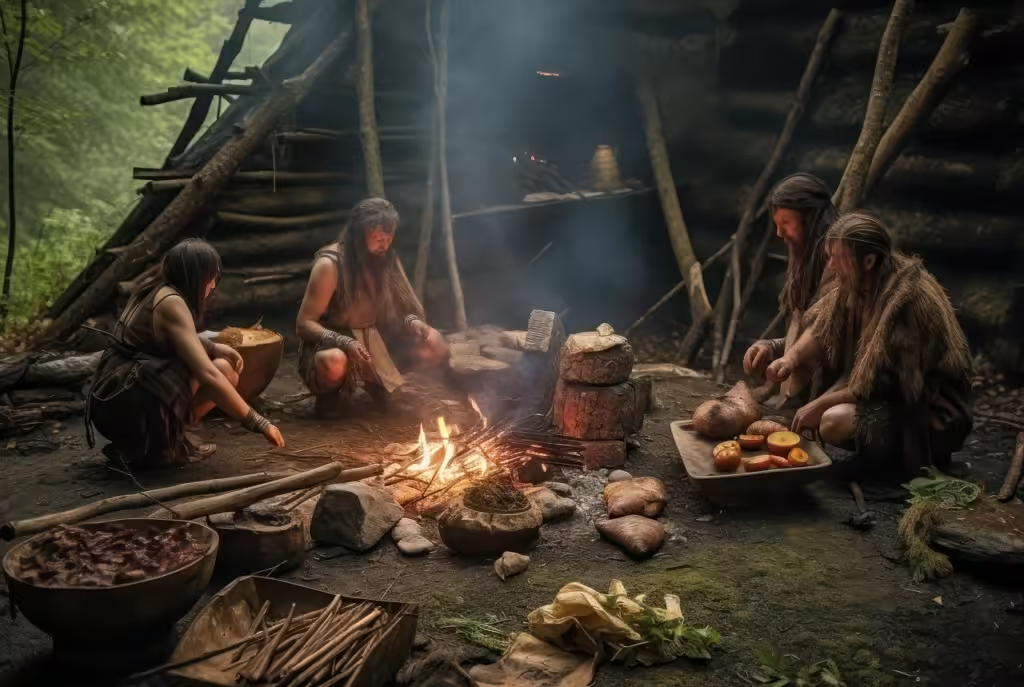
The Phases of the Stone Age in India
Old Stone Age, or Paleolithic Age
The earliest Stone Age period is the Paleolithic Age, sometimes known as the Old Stone Age. It started some 2.6 million years ago and continued until perhaps 10,000 BCE. Simple stone tools and a nomadic way of life define this age; early people were always in search of sustenance, so they were always moving.
Early Human Living Styles
Early Paleolithic humans in India lived in open-air locations and caverns. Most hunter-gatherers depended on their surroundings for their survival, they followed the herds. Showcasing some of the first evidence of human life in India, the Bhimbetka rock shelters in Madhya Pradesh are a major archeological site from this age.
Paleolithic Period Tools and Technology
Mostly, chipping stones to produce sharp edges produced the tools of this age. Among the most often used basic yet powerful tools were hand axes, choppers, and flakes. Reflecting the creativity of early people, the simplicity of these tools belies the expertise needed to construct them.
Middle Stone Age, or Mesolithic Age
The Mesolithic Age, sometimes known as the Middle Stone Age, started as the Paleolithic Age came to finish. Human history changed at this time, roughly 10,000 BCE to 4,000 BCE.
From hunter-gatherers to early agriculture
From pure hunting and gathering, the Mesolithic Age witnessed a slow change to the start of agriculture. More steady and settled lives followed from people tending to crops and domesticating animals. A crucially pivotal point in human history, this change prepared the ground for the Neolithic Revolution.
Art and Culture during the Mesolithic Age
During the Mesolithic, art thrived. Early human creative expression is demonstrated by the animal, hunting scene, and daily life-oriented rock drawings discovered in the Bhimbetka caves. These paintings are stories carved in stone, a window into the life of our forebears, not only artwork.
The New Stone Age, or Neolithic Age
Beginning in 4,000 BCE and lasting until 2,000 BCE in India, the Neolithic Age, sometimes known as the New Stone Age, This era was revolutionary since it brought in farming, established towns, and technical developments.
Agricultural Revolution in Neolithic Times
The Agricultural Revolution marks the most important shift of the Neolithic Age. Large-scale domesticating of plants and animals by humans resulted in the evolution of permanent communities. One of the first centers of agriculture in the world, the rich plains of the Indus Valley developed this way.
The dawn of established communities
People no longer had to wander in the hunt for food with the development of agriculture. Permanent settlements sprang from this, and finally, they developed into villages and cities. The foundation of civilization was laid by developments in pottery, weaving, and tool-making during the Neolithic Age as well.
The Impact of the Stone Age on Modern India
Inheritance in Contemporary Indian Culture
Modern Indian society still clearly reflects the StoneAge legacy. Many classic crafts, like ceramics and stone cutting, had origins in this age. Generation after generation of our forebears has carried on their methods and tools, which have shaped Indian art and culture today.
Archaeological Findings and Their Significance
Understanding the history of human civilization in India depends much on StoneAge archeological findings. Sites such as Bhimbetka, Mehrgarh, and others have given insightful analyses of early human life. These revelations enable us to value the creativity of our forebears and the basis they set for the next generations.
Conclusion
In India, the StoneAge represents the narrative of human creativity, survival, and invention—not just a chapter in a history book. From the first stone tools to the evolution of agriculture, this period prepared the ground for civilization’s expansion. Thinking back on this remarkable era helps us to appreciate the difficulties and achievements of our forebears, whose legacy still shapes our planet now.


FAQs
In India, which three main Stone Age stages match?
The three main periods are Paleolithic, Old Stone Age; Mesolithic, Middle Stone Age; and Neolithic, New Stone Age.
Why in the Stone Age were stone tools so important?
Applied in manufacturing, hunting, and cutting, stone tools were necessary for survival. They represent the first technical invention of human history.
Where in India would one find evidence of the Stone Age?
Key archeological sites include the Bhimbetka rock shelters in Madhya Pradesh and the Mehrgarh site in contemporary Pakistan.
With the turn to agriculture, how did Stone Age human societies evolve?
The shift to agriculture generated villages, permanent residences, and the foundation of civilization.
In what ways does the Stone Age define present India?
Clear evidence of the legacy includes traditional crafts like stone carving and pottery; archeological discoveries also enable us to more fully understand early human history.