
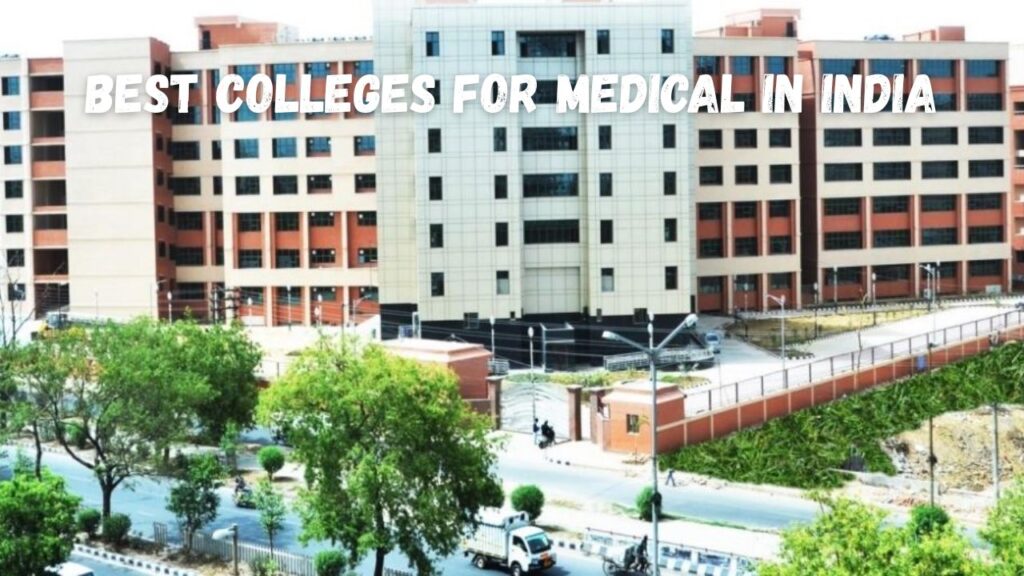
If you’re hunting the best colleges for medical in India, welcome — you’re asking the right question. Choosing where to study medicine shapes your clinical exposure, research options, and the kind of doctor (or researcher) you’ll become. In this guide I’ll walk you through the institutions that consistently rank at the top, the criteria that matter, admission paths (NEET), and a realistic way to pick the best colleges for medical in India for your goals.
Note: when I use the phrase best colleges for medical in India, I mean institutions that combine strong clinical exposure, proven teaching, research culture and transparent outcomes.
Quick overview — what “best” actually means in medicine
When students ask “Which are the best colleges for medical in India?”, they usually want a mix of:
Excellent clinical exposure (large, busy teaching hospitals).
Strong faculty and postgraduate teaching.
Research activity and access to labs/clinical trials.
Transparent selection (NEET) and clear seat/fee structure.
Recognised degrees with strong alumni networks.
The top medical colleges in India tend to score well on all these axes — and they’re visible in national rankings such as the NIRF Medical list.
The usual top contenders — short list you’ll see everywhere
Based on national rankings and long-standing reputation, these names appear most often when people search for the best colleges for medical in India:
All India Institute of Medical Sciences (AIIMS), New Delhi — frequently ranked #1 among medical colleges; wide clinical exposure and deep research footprint.
Postgraduate Institute of Medical Education & Research (PGIMER), Chandigarh — strong in postgraduate training and research.
Christian Medical College (CMC), Vellore — renowned for clinical care, hospital-based training and alumni in academics/clinical practice.
Maulana Azad Medical College (MAMC), New Delhi and Lady Hardinge Medical College (LHMC), New Delhi — high clinical volumes and competitive NEET cutoffs.
Armed Forces Medical College (AFMC), Pune — excellent infrastructure and disciplined clinical training.
These institutions are regularly listed among the best colleges for medical in India by NIRF and major education portals; they combine patient load, faculty experience and research output in ways that matter.
Why these colleges repeatedly top the lists
Here’s why the usual suspects become the best colleges for medical in India in practice — not just on paper:
Clinical volume & case mix. Large government hospitals and mission hospitals offer exposure to diverse and complex cases, which is critical for learning medicine in a short time. AIIMS, PGIMER and CMC are great examples.
Faculty & postgraduate strength. Top colleges have experienced faculty who run active postgraduate (MD/MS/DNB) programs — a key sign of academic depth.
Research & publications. Leading institutes publish regularly, attracting grants and creating opportunities for undergraduates and postgraduates to participate in meaningful research.
Reputation & placements. Graduates from top colleges often get priority for higher specialty training, fellowships, and academic posts — which reinforces the cycle of excellence.
If you’re evaluating the best colleges for medical in India, these are the practical metrics to weigh above all else.
How to read rankings (and what to ask beyond them)
Rankings (like NIRF) are useful signals but not the whole story. When you compare the best colleges for medical in India, do the following:
Ask for bed strength and OPD/ward statistics. High patient footfall = more hands-on learning.
Check the faculty-to-student ratio and availability of senior consultants in each department.
Look for research centers and funded projects — they show that the institution is active beyond routine teaching.
Request recent exam/neighboring-institution fellowship placements (where their postgraduates go for super-specialty training).
NIRF and respected portals list institutional strengths and are a good starting point for identifying the best colleges for medical in India.
Admission route: NEET UG (and what cutoffs mean)
If your aim is to join one of the best colleges for medical in India, remember:
NEET UG is the single gateway for MBBS seats across India’s government and most private medical colleges.
High-ranked colleges have the highest NEET cutoffs—meaning you’ll need top national scores for AIIMS, CMC, PGIMER (UG seats at PGIMER limited historically), MAMC, and other government colleges.
Counselling rounds (DGHS, state, and institutional) decide seats after NEET; fees and seat categories (All India, state quota, NRI, management) differ.
Prepare NEET thoroughly and map your expected rank to the best colleges for medical in India you realistically can access via past cutoff trends.
Public vs private medical colleges — how to choose
When students ask “Which are the best colleges for medical in India?”, many mean the top public medical colleges — but excellent private colleges exist too. Here’s how to think about the difference:
Public (government) colleges: Lower fees, high patient load, strong clinical exposure, often extremely competitive NEET cutoffs. Typical examples among the best colleges for medical in India are AIIMS, MAMC, and state medical colleges.
Private colleges: Higher fees, variable clinical exposure (depends on attached hospital), and sometimes stronger infrastructure and newer labs. Some private institutions rank highly and make the list of best colleges for medical in India (e.g., top private colleges included in NIRF and national lists).
Your choice between public and private depends on budget, location, and your tolerance for competition in NEET.
Specialty training & postgrad routes — why they matter
If you see a medical college listed among the best colleges for medical in India, check the postgraduate strength:
Where do MD/MS graduates go for super-specialty (DM/MCh) or international fellowships?
Does the college have in-house super-specialty departments, or do graduates need to seek fellowships externally?
Is there a robust research mentorship program for those interested in academics?
A medical college’s postgraduate track record often tells you more about its teaching quality than the undergraduate intake alone. Top best colleges for medical in India usually have solid postgraduate pipelines.
Also Read: Top 10 Best Government Colleges for Clinical Psychology in India
Regional excellence — top picks by zone (practical shortlist)
If you’re looking for the best colleges for medical in India by region, here’s a quick practical map:
North: AIIMS Delhi, Maulana Azad Medical College (MAMC), PGIMER Chandigarh.
South: Christian Medical College (CMC) Vellore, St. John’s Medical College Bangalore, Kasturba Medical College.
West: AFMC Pune, Seth GS Medical College (Mumbai).
East: Institute of Post Graduate Medical Education & Research (IPGMER), Kolkata; KEM/Hinduja equivalents in other metros.
Each of these appears in national lists and is regularly named among the best colleges for medical in India.
Practical checks for your final shortlist (what I do as a counsellor)
When you’ve shortlisted 3–6 colleges that appear among the best colleges for medical in India, do this:
Department tour: If possible, view the teaching hospital wards, ICU, OT schedules and postgraduate teaching sessions.
Ask for clinical stats: Annual OPD/annual admissions, bed occupancy rates, and major surgery counts.
Confirm approvals: NMC (formerly MCI) recognition for MBBS/PG, and related program approvals.
Talk to current students: Ask about teaching rounds, frequency of OPD posting, and hands-on access.
Check fee structure and bonds: Some private colleges require bonds or service commitments — read them closely.
These steps will help you separate truly top clinical colleges from those that merely appear polished online.
Common myths & real talk
Myth: “Top-ranked = easy path to super-specialty.”
Real talk: Ranking helps, but individual performance, internship experience and entrance scores for DM/MCh/fellowships are decisive. The best colleges for medical in India give you the platform — you still need to perform.Myth: “Private equals poor clinical exposure.”
Real talk: Some private colleges have strong attached hospitals and excellent hands-on learning; check bed strength and case mix rather than assuming.
Final checklist & action plan (how to move forward)
Define your target group (top-tier AIIMS/PGIMER/CMC or strong state colleges/private top-ranked).
Set NEET goals based on past cutoffs of the best colleges for medical in India that you want.
Create a 3-tier list: stretch, target, safety colleges.
Request official placement/clinical stats from shortlisted colleges and verify NMC recognition.
Plan finances — government vs private fee gaps, scholarships, and loans.
Prepare for interviews/medical college counselling where applicable (AFMC and a few other institutes require additional stages).
Closing — my honest take as MrHkGedar
The phrase best colleges for medical in India points you toward places with depth of training, high clinical exposure, and active research. If your aim is clinical excellence and academic rigor, focus on institutions that show transparent clinical statistics, strong postgrad pipelines, and a culture of mentorship. Use NIRF and reputable portals as starting signals, then dig deeper — the wards, faculty, and real patient volumes will tell you the truth.
If you want, tell me your NEET score/range (or target score), preferred region, and budget; I’ll map a personalized 6-college shortlist of best colleges for medical in India you can realistically aim for — with past cutoff ranges, counselling tips, and a prep timeline. Let’s turn your search for the best colleges for medical in India into an admission letter. 🩺
Sources (key references to verify)
NIRF India Rankings — Medical (2024).
Shiksha & Careers360 overviews for top medical colleges.
Times of India & India Today list summaries of top medical colleges and their context.
Note: Rankings and cutoffs can change year-to-year. Always confirm the latest NIRF lists and official college/NMC pages before applying.