
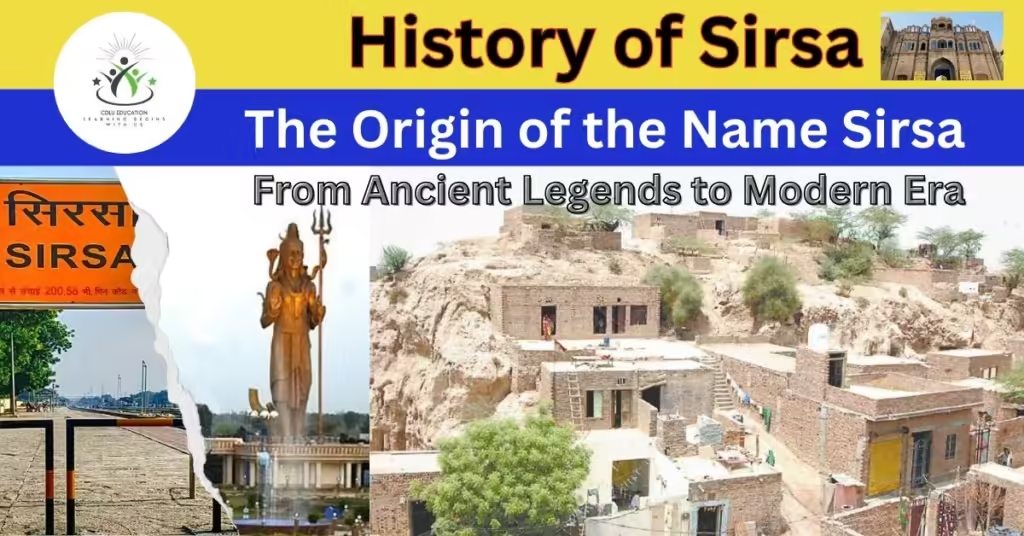
Sirsa, a historic city in Haryana, dates back to ancient times as Sairishaka, mentioned in the Mahabharata and linked to the Indus Valley Civilization. It flourished under the Chauhans, Delhi Sultanate, and Mughals but was ravaged by Timur’s invasion. Under British rule, it grew administratively and saw demographic changes post-Partition. Now part of Haryana, Sirsa is a thriving urban center, preserving its cultural heritage through forts, temples, and Sufi shrines.
The History of Sirsa
Introduction
Sirsa, a prominent city in Haryana, India, carries a history that spans thousands of years. Known for its ancient roots and cultural significance, Sirsa offers a glimpse into the rich past of the Indian subcontinent. Let’s uncover its historical journey.
Geographical Location and Importance
Strategic Location
Situated in the northwest of Haryana, Sirsa lies close to the borders of Rajasthan and Punjab. This unique positioning made it a significant trade and cultural hub throughout history.
Agricultural Significance
The fertile lands of Sirsa have contributed to its prominence as an agrarian region, playing a vital role in Haryana’s economy.
The Origin of the Name Sirsa
Ancient Names
Historically, Sirsa was known as “Sairishaka,” as mentioned in ancient texts. Over time, this name evolved into its present form.
Legends and Myths
Some legends suggest the name derives from the abundance of “saras” (ponds) in the area, while others link it to mythical rulers and ancient stories.
Sirsa in Ancient Times
Prehistoric Evidence
Archaeological findings indicate that Sirsa was part of the Indus Valley Civilization. Tools, pottery, and other artifacts suggest advanced urbanization in the region.
Early Settlements
The area was home to various tribes and cultures, contributing to its diverse and vibrant history.
Medieval History of Sirsa
Mauryan and Gupta Eras
Under the Mauryan and Gupta empires, Sirsa thrived as an administrative and trade center. Coins and inscriptions from this era underline its historical importance.
Cultural Flourishing
During this time, Sirsa saw the rise of art, literature, and religion, becoming a hub for intellectual and cultural activities.
Sirsa Under the Delhi Sultanate
Political Changes
The Delhi Sultanate brought administrative reforms and significant cultural shifts to Sirsa.
Architectural Developments
Structures built during this era reflect Islamic architectural influences, adding to the city’s historical depth.
Sirsa in the Mughal Era
Strategic Importance
During the Mughal period, Sirsa’s location made it a crucial administrative and military outpost.
Economic Growth
Agriculture and irrigation techniques improved under the Mughals, boosting the local economy.
The Role of Sirsa During British Rule
Infrastructure Development
The British introduced modern infrastructure in Sirsa, including railways and roads, connecting it to larger trade networks.
Freedom Struggle
Sirsa played an active role in the Indian independence movement, with its residents participating in protests and revolts.
Post-Independence Transformation
Urbanization and Modernization
Since 1947, Sirsa has grown into a modern city with improved infrastructure, education, and industry.
Preserving Heritage
Efforts have been made to conserve its historical sites and cultural identity amid rapid development.
Also Read: Mysteries Beginning of Harappan Civilization
Religious and Cultural Significance
Temples and Gurudwaras
Sirsa is home to numerous religious sites, including ancient temples, gurudwaras, and mosques, showcasing its spiritual diversity.
Festivals and Traditions
The city celebrates festivals like Diwali, Gurpurab, and Eid with enthusiasm, reflecting its inclusive culture.
Sirsa’s Historical Monuments
Forts and Archaeological Sites
The remnants of ancient forts and archaeological sites in Sirsa attract history enthusiasts and tourists.
Landmarks of Heritage
Places like the Dera Sacha Sauda headquarters are integral to Sirsa’s identity.
Economic Evolution of Sirsa
Agriculture as a Backbone
Sirsa remains a key player in Haryana’s agricultural sector, producing crops like cotton, wheat, and rice.
Industrial Development
Recent years have seen the growth of small industries, particularly in textiles and dairy production.
Education and Literary Heritage
Educational Institutions
Sirsa boasts reputed schools and colleges that contribute to Haryana’s educational excellence.
Contribution to Literature
The city has a rich tradition of producing notable poets and writers, adding to India’s literary heritage.
Tourist Attractions in Sirsa
Must-Visit Places
Sites like Hisar Fort, Dera Sacha Sauda, and local markets provide a mix of historical and modern experiences.
A Blend of Past and Present
Tourists can explore Sirsa’s historical roots while enjoying its contemporary vibe.
Conclusion
Sirsa stands as a testament to resilience and progress, blending its ancient heritage with modern advancements. Its rich history, cultural diversity, and economic contributions make it a unique and fascinating city that continues to thrive.
FAQs
1. What is Sirsa’s historical significance?
Sirsa has roots in the Indus Valley Civilization and has been a significant center for trade, culture, and governance throughout history.
2. What are the main attractions in Sirsa?
Notable attractions include Hisar Fort, Dera Sacha Sauda, and various temples and gurudwaras.
3. How has Sirsa evolved economically?
Sirsa transitioned from being primarily agrarian to embracing industrial growth, particularly in textiles and dairy.
4. What makes Sirsa culturally unique?
Its blend of religious diversity, festivals, and historical sites makes it culturally vibrant and unique.
5. How can one reach Sirsa?
Sirsa is well-connected via road and rail, with the nearest major airports in Chandigarh and Delhi.