
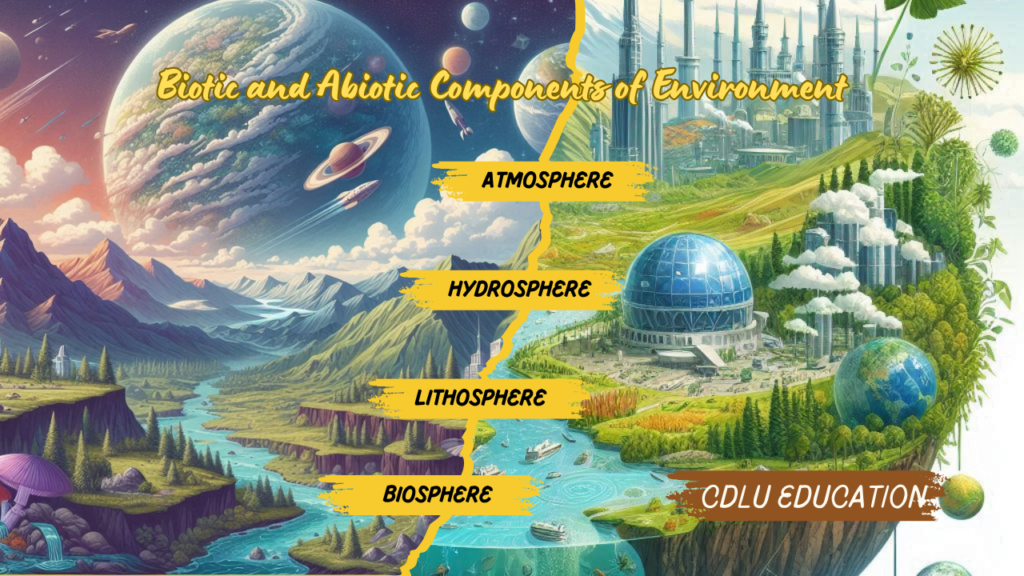
The environment is the entire living (biotic) and non-living (abiotic) conditions that affect life on the earth. In this regard, biotic and abiotic elements are spread throughout the major spheres of the planet: atmosphere (air), hydrosphere (water), lithosphere (land) and the integrated biosphere (global life zone). These Earth systems are richly interacting – such as atmospheric gases and ocean currents (abiotic factors) help to manage the climate which supports forests and oceans full of life (biotic components). Britannica describes the environment as a combination of all the physical, chemical and biological factors that surround an organism and which scientists separate into the abiotic (nonliving) and biotic (living) components. This paper will discuss the main biotic and abiotic aspects in both spheres of the planet, giving examples, statistics, and examples in order to help students and teachers realize how life and its environment exist in harmony and interdependence.
Large Environmental Spheres and Components.
The earth can be considered to be composed of four overlapping spheres; atmosphere (air), hydrosphere (water), lithosphere (solid earth) and biosphere (life). Every sphere has its own composite of biotic and abiotic elements. An example is the atmosphere, which is comprised of gases (abiotic) such as nitrogen and oxygen that nourish birds and flying microbes (biotic). Fish, plankton, and coral are found in the water (abiotic) of the hydrosphere. The lithosphere contains soil and rocks (abiotic) that support the lives of plants, fungi and animals (biotic). And the biosphere is nothing but a collection of ecosystems in which biotic components flourish, which depends on abiotic resources, such as sunlight, water, and minerals.
Below is a summary table highlighting examples of these biotic and abiotic components in each sphere:
| Sphere | Biotic Components (Examples) | Abiotic Components (Examples) |
|---|---|---|
| Atmosphere (Air) | Airborne microbes, pollen, seeds, birds | Nitrogen, oxygen, CO₂, water vapor, ozone, temperature, UV radiation |
| Hydrosphere (Water) | Phytoplankton, fish, coral, aquatic plants, whales | Water (H₂O), salinity, temperature, currents, dissolved oxygen, nutrients |
| Lithosphere (Land) | Soil microbes, plants, trees, insects, burrowing animals | Rocks, minerals, soil, pH, moisture, organic matter, temperature |
| Biosphere (Living Zone) | All living organisms (plants, animals, fungi, bacteria, etc.) | Sunlight, water, air, temperature, soil, nutrients, climate (abiotic conditions supporting life) |
Table: Examples of biotic and abiotic components in each Earth sphere.
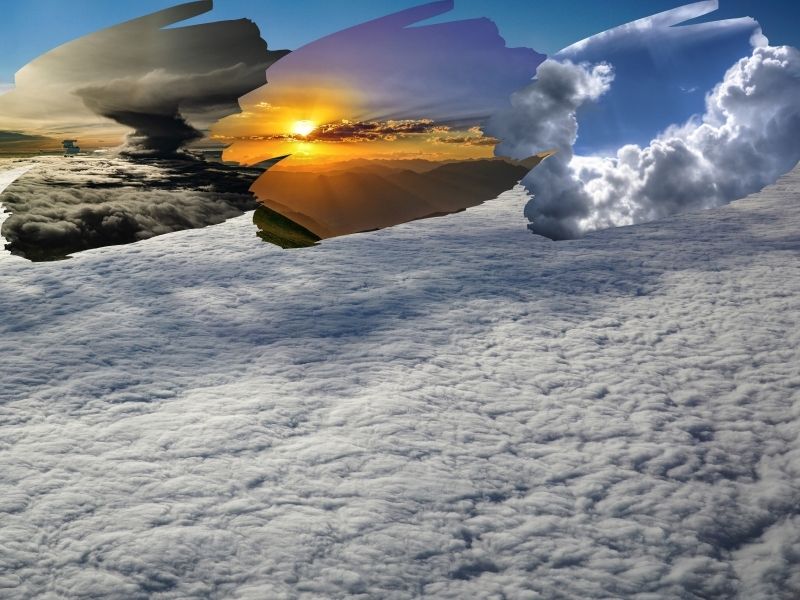
Atmosphere (Upper Atmosphere): Biotic and Abiotic Components
The space is a primarily abiotic space made of gases layers on the earth. It comprises of the troposphere (up to 10km of altitude), the stratosphere (10-50km), the mesosphere and the thermosphere. This is an outermost shell of air made up of mostly nitrogen (approximately 78 percent) and oxygen (approximately 21 percent) with a few bits of argon, carbon dioxide and others. The abiotic factors of the atmosphere – atmospheric gases, atmospheric pressure, atmospheric temperature gradients and sunlight – establish conditions that favor life at low altitude. As an example, the stratosphere absorbs harmful UV radiation due to the ozone and the troposphere causes weather, and climate due to variable temperature and moisture. Water vapor and aerosols which affect climate and precipitation are also found in the atmosphere. Lack of these abiotic factors would not allow life on Earth to continue.
The upper atmosphere is largely non-biotic, but it also surprisingly contains some biotic elements as well. Studies have been carried out in high altitude and revealed that microscopic life can be lifted into the air. Pollen, fungal spores and bacteria are taken to enormous altitudes by wind currents. Traditional experiments (such as those by Charles Lindbergh in the 1930s) were able to sample the upper troposphere and discovered “spores of fungi and pollen grains, among others” showing that even the air high up contains living material. In current studies (such as NASA balloon projects), airborne microbes are observed in the stratosphere, and can survive hours to days in an inactive state. These air microorganisms are small in quantity but they are the thinly spread biotic components of air of the upper atmosphere. In general, the atmosphere consists largely of abiotic (gases, temperature, pressure) components, but such elements as microbes, pollen, and floating seeds are also biotic and belong to this space.
Key abiotic factors in the atmosphere include:
Air composition: 78% N₂, ~21% O₂, ~0.04% CO₂, water vapor, trace gases (from Britannica).
Radiation and ozone: The ozone layer (stratosphere) and water vapor affect solar UV and climate.
Temperature/pressure gradients: Vary by altitude, driving weather (wind, clouds, storms).
Biotic factors in the atmosphere (though limited) include:
Bioaerosols: pollen, seeds, fungal spores, bacteria transported on winds.
Animals: Birds and flying insects live in the lower atmosphere (troposphere).
All these abiotic and biotic components of the atmosphere combine to form the climate system and life of the Earth that breathes air. This combination of gases and particles (abiotic) sustains metabolism and photosynthesis and flying organisms and airborne microbes (biotic) connect the atmosphere with the ecosystems beneath.
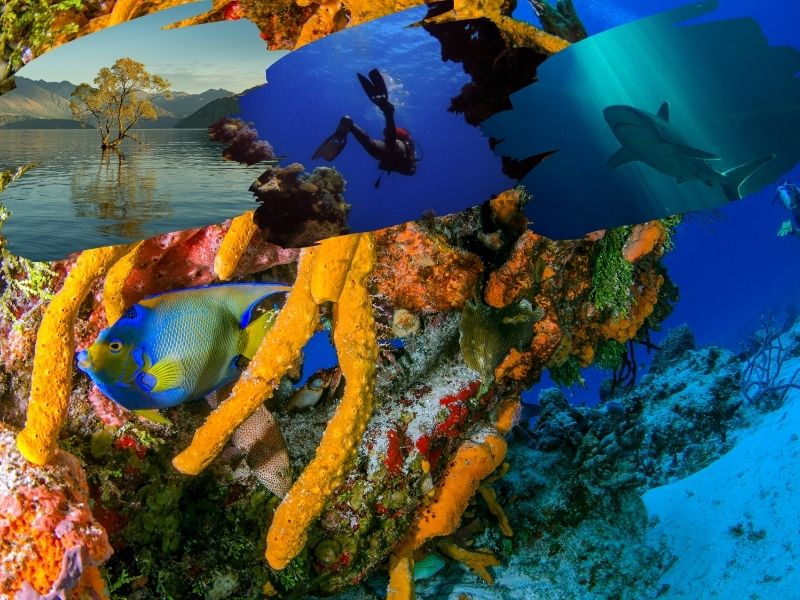
Hydrosphere: Biotic and Abiotic Components
All the water on the Earth- oceans, lakes, rivers, glaciers, groundwater and vapor- is the hydrosphere. It has a thickness of 10-20 km and acquires the shape of oceans depths up to the heights of the clouds. Water per se and the physical-chemical properties of water, including water temperature, salinity, pH, dissolved nutrients and gases, currents, and water cycle (evaporation/precipitation) are the distinguishing features of the hydrosphere as an abiotic system. It should be mentioned that ocean water is salty and that freshwater comprises approximately 2.5 percent of the Earth (mostly locked away in ice or underground water). These non-living factors characterize the habitat: the density of the water and its nutrient content varies in tropical seas of warm water and in cold waters of the poles.
An image of a coral-reef atoll is embedded above demonstrating the biotic and abiotic interaction of the hydrosphere. The deep blue water (abiotic) contains highly abundant biota: the coral creatures construct reefs, fish and crustaceans dwell in the reefs, marine vegetation and algae transform sunlight energy. A graphic example of the hydrosphere is the coral reefs, whereby clear, warm and highly-lit water (abiotic factors) provides support to diverse life forms (biotic components). It is true that most of the biosphere biomass on Earth is found in oceans in the form of small planktons up to whales. Britannica writes that the hydrosphere comprises all of the liquid and ice water on the surface of the Earth and groundwater, along with water vapour, which forms the abiotic environment and resource base of an astonishing diversity of life.
Key abiotic factors in the hydrosphere include:
Water (H₂O): liquid (oceans, lakes), solid (glaciers, ice), and gas (water vapor/clouds).
Salinity and chemistry: Ocean salt content (~3.5%) and nutrients (nitrates, phosphates, minerals).
Temperature and light penetration: Vary with depth and latitude, affecting ecosystem zones.
Physical features: Currents, waves, tides, and water pressure.
Biotic factors in the hydrosphere include:
Marine organisms: Phytoplankton, algae, fish, corals, marine mammals (whales, dolphins).
Aquatic plants and microbes: Seagrasses, kelp forests, bacteria and plankton form the base of food webs.
Amphibians and semi-aquatic species: Frogs, water insects, marsh plants living at the water-land interface.
Such biotic and abiotic aspects of the hydrosphere are closely interconnected: as an example, phytoplankton (biotic) requires sunlight and nutrients (abiotic) to carry out photosynthesis and generate oxygen that is inhaled by fish (biotic). Varying abiotic conditions (e.g., ocean warming or acidification) affect marine life significantly, which is why abiotic environmental factors affect each other.
Lithosphere: Biotic and Abiotic Components
The solid Earth – the rocky crust and upper mantle – on which terrestrial life lives is the lithosphere. It is an abiotic sphere that will consist of minerals, rocks, soil and soil nutrients. In the picture above, one can see a foggy mountainous scene; this geologic scene emphasizes abiotic characteristics of rock layers, soil, moisture (fog), and terrain. Minerals and rocks (silicates, carbonates, ores), soil type, pH, nutrient composition, sunlight and climate on surface are the most important components of lithosphere. Geological processes – erosion, plate movements and volcanic activity help to constantly change the abiotic structures of the lithosphere.
The lithosphere is biotic life with great diversity. Even soil is full of life: bacteria, fungi, nematodes, earthworms and insects are decomposing organic remains and recycles nutrients. Plants grow on the soil (trees, grasses, crops) aboveground and animals (from burrowing mammals to birds and insects) depend on land as habitat. According to Britannica, the lithosphere is composed of rocks and soil found on the surface of the earth- the material in which forests, farms, and deserts are made. Indicatively, the soil minerals and water present in a forested mountain slope (as in the picture), may be abiotic, which contribute to biotic components such as oak trees, mosses and wildlife. The biotic components of the lithosphere are changed by biotic components over time as roots and micro- organisms slowly break down the otherwise tough rocks into soil.
Key abiotic factors in the lithosphere include:
Soil and rock composition: Mineralogy, texture, depth of soils (sand, clay, loam), and rock types (igneous, sedimentary, metamorphic).
Nutrients and pH: Availability of phosphorus, nitrogen, trace minerals, and acidity/alkalinity which affect plant growth.
Topography and climate: Mountainous vs. flat terrain, and climate factors (temperature, rainfall) that influence soil formation.
Biotic factors in the lithosphere include:
Terrestrial plants: Trees, shrubs, grasses that root in soil.
Animals: Mammals, reptiles, insects, birds that live on or under the soil surface.
Soil life: Microbes, earthworms, fungi and other decomposers in the soil.
It is these biotic and abiotic elements in the lithosphere that create such ecosystems as forests, grasslands, and deserts. As an example, soil bacteria (biotic) give out nutrients (abiotic factors) to plant roots, whereas plant roots make soil stable. The lithosphere thus is a complicated combination of nonliving earth materials and living things, one that has an effect on the existence of the other.
Biosphere: Biotic and Abiotic Components
The biosphere is merely the world total of all the ecosystems – the zone of life on the planet. It includes everything biotic (all plant, animal, fungus and bacterium etc.) and the abiotic resources needed by them. In other words, the life itself is a biosphere which interacts with abiotic factors. According to Britannica, biosphere is considered a biosphere – the area of life or the zone of life, the living entities (or biotic factors) plants, animals, fungi, algae, protists, bacteria, and other organisms, their wastes and remnants. This is whereby it is evident that the whole biosphere is composed of biotic components, on an abiotic level (land, air, water).
Soil microbes, tropical trees and insects are examples of components of the biosphere in a rainforest setting, and sunlight, soil minerals and rainfall are examples of constituents of the abiotic surrounding. In a coral reef with clear sea water, sunshine and carbonate minerals (abiotic), there coexist colorful fish and corals (biotic). An example is the Australian Great Barrier Reef, which is a part of the biography of the planet, which contains biotic coral and fish, which relies on abiotic environment in the sea. Equally important, kilometers underground or on mountain tops, microbes exist; they all are a part of the biosphere, and are sustained by abiotic forces like heat, water and nutrients.
It is worth noting that the biosphere makes the presence of the biotic and the abiotic elements more prominent: one cannot sustain the existence without the other. Biotic (photosynthesis, decomposition, respiration) is a process that recycles carbon and nutrients and influences abiotic conditions. Meanwhile, the changes in the non-living factors (climate change, nutrient levels, sunlight) directly influence the organisms (biotic) that can live and reproduce. The following interactions are emphasized by scientists: ecology is concerned with interdependence between biotic and abiotic factors that characterize the ecological system.
Relations of Biotic and Abiotic parts.
Although we have talked about each sphere individually, real world settings are a combination of these elements. Both the biotic and the abiotic component interact in any given ecosystem. An example is that rainfall (abiotic) erodes mountains (lithosphere) and fills rivers (hydrosphere) and provides plants and animals (biotic) with their habitats. British flora (biotic) also has the ability to modify the atmosphere through its capacity to absorb CO2 and animals release gases with CO2 and also nutrients to the ground modifying abiotic chemistry. The water cycle relates every sphere: ocean water (hydrosphere) is carried by the air (atmosphere) through evaporation, and then it comes back and sustains life on the land (biosphere). The ash can be emitted by volcanic eruption (abiotic phenomenon in the lithosphere) that will inhibit sunlight (abiotic) and affect the growth of plants (biotic). This network of interrelations demonstrates that in actual ecosystems biotic and abiotic elements cannot be separated.
Besides the natural interactions, now human activities have become one of the key components that connect biotic and abiotic spheres. Burning fossil fuel, e.g. contributes CO2 to the atmosphere (abiotic change) and this warms climates, manipulates forests and agriculture (biotic communities). Deforestation (removal of biotic tree cover) changes the carbon and soil (abiotic) levels. This pollution brings about abiotic contaminants (chemicals) which harm biotic lifeforms. It is important to recognize the following links: by knowing about biotic and abiotic components, we can predict the ripple effects of changes (climate change, pollution, land use) across the ecosystems.
Examples and Applications
- Ecosystems in Class: During the learning of ponds or forests, the students are able to enumerate both the biotic and the abiotic components (e.g. frogs, algae, water pH, sunlight, etc.). An example of this is in an experiment in a classroom pond where the temperature and light (abiotic) and the fish and plants (biotic) are measured and observed.
- Real-world Data: Environmental data is usually in the form of charts. An example is that in one study, the abundance of plankton (biotic) is dependent on ocean temperatures (abiotic). Likewise, the pH (abiotic) soil surveys can be used to forecast crop or bacteria (biotic) success.
- Diagrams: Tables (above) and the diagram of the systems of the earth (above) may be used to demonstrate by use of diagrams how the spheres intersect. Abiotic energy can be connected to biotic food webs by linking flowcharts of sunlight to photosynthesis to growth to plants.
Evaluating both real-life situations (i.e. a coral reef or a mountain forest) and statistics (water chemistry tables, climate graphs), learners can discover that ecosystems are webs of both biotic and abiotic components. The environment on our planet is characterized by interplay of living organisms with the air, water, soil, and the light.
Conclusion
Knowledge of biotic and abiotic elements is a basic element of environmental science. These two kinds of components interact in a manner that they maintain the life cycle: abiotic components precondition conditions (energy, water, nutrients), and biotic components initiate cycles (food chains, decomposition, the formation of habitats). This understanding is essential to students and environmentally conscious readers to understand how ecosystems work, and why it is essential to take good care of living organisms as well as of their physical surroundings.
Thanks for the help
Pingback: Comprehensive Guide to Ecology and Environment: Understanding the Interrelationships of Life - CDLU Education 2024
Pingback: Development of Environmental Awareness : Definition, Need, Concept and Society of Environment - CDLU Education
Good information
Nice post. I learn something totally new and challenging on websites I stumbleupon everyday.
It will always be exciting to read through articles from other authors and use a little something from their
websites.
Hi there mates, how is everything, and what you want to say regarding this piece of writing, in my view its really awesome in support of me.