
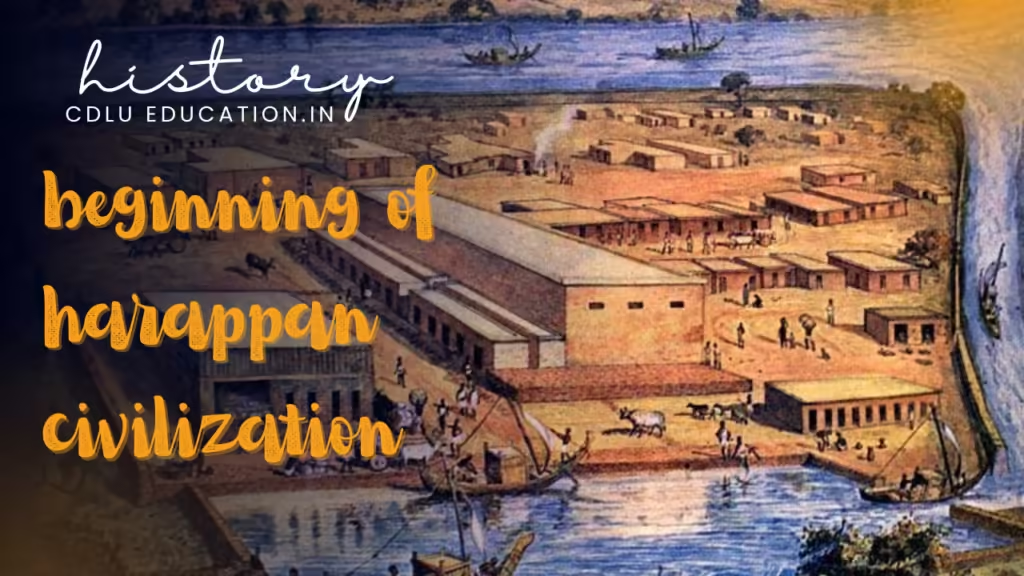
Beginning of Harappan Civilization
The Harappan Civilization, also known as the Indus Valley Civilization, is one of ancient history’s earliest, most sophisticated societies. This civilization, which emerged around 3300 BCE on the fertile banks of the Indus River and its tributaries, flourished through complex urban planning, unique cultural artifacts, and advanced social structures. The Harappans laid the foundation for what we now recognize as early urban civilization, demonstrating advancements that shaped the course of history.
The period and Geographical Spread of the Harappan Civilization
The Beginning of Harappan Civilization can be divided into three phases: Early Harappan (3300–2600 BCE), Mature Harappan (2600–1900 BCE), and Late Harappan (1900–1300 BCE). During these phases, the civilization spread across an impressive geographic area, including what is now Pakistan, northwestern India, and parts of Afghanistan and Iran. At its peak, the civilization covered an area of about 1.25 million square kilometers, an area larger than ancient Egypt or Mesopotamia.
Culture of the Harappan Civilization
The most notable aspect of the Harappan culture was its focus on uniformity and order. Harappan cities such as Harappa, Mohenjo-daro, and Dholavira were carefully planned with grid layouts, standardized weights and measures, and sophisticated drainage systems. These advancements suggest a highly organized society with an emphasis on public health and urban planning. Unlike other contemporary civilizations, Harappan urban areas had multi-story buildings, advanced sewage systems, and reservoirs for water storage.
Daily Life and Economy
The Harappan economy was primarily agriculture-based, but they were also adept at trade and craftsmanship. Crops such as wheat, barley, peas, sesame, and cotton formed the backbone of their agriculture, while a strong network of trade linked them to distant regions. Archaeologists have discovered evidence of trade links with Mesopotamia, Central Asia, and the Persian Gulf, indicating that the Harappans were skilled traders.
Craftsmanship played an important role in Harappan society. The discovery of intricate beadwork, pottery, and metal objects shows their expertise in jewelry-making, pottery-making, and metallurgy. This skill in craftsmanship, combined with their trade network, facilitated cultural exchange and economic prosperity.
Discovering the Harappan Civilization
The first traces of the Beginning of Harappan Civilization were discovered in 1921 by Rai Bahadur Daya Ram Sahni at Harappa, followed by similar discoveries at Mohenjo-Daro. These discoveries revealed a new dimension of the ancient Harappan civilization, including its impressive architecture, artifacts, and evidence of a sophisticated society. Ongoing excavations since then have unearthed numerous sites in India and Pakistan, further enriching our understanding of the history and cultural heritage of the civilization.
Architecture and Urban Planning
One of the most important achievements of the Harappan civilization was its advanced architecture and urban planning. Harappan cities were characterized by their organized grid patterns, where streets crossed each other at right angles and they were equipped with well-planned drainage systems. For example, the Great Bathhouse located at Mohenjo-daro is a testament to Harappan’s engineering skills. Built of precisely laid bricks, the Great Bathhouse has a sophisticated drainage and water supply system, suggesting the importance of ritualistic or community bathing practices.
Residential and Public Buildings
Harappans demonstrated an architectural understanding that went beyond public structures. Residential buildings had courtyards, bathrooms, and even waste chutes connected to street-level sewage systems. These early implementations of urban planning show that Harappans were deeply invested in creating a clean and well-organized living environment for their communities.
Social Structure and Governance
While the exact nature of the Harappan governance system is still unclear as there are no extant texts, it appears that their social structure was highly organized. The uniformity of architectural design and standardized measurement systems in cities suggest a centralized authority or cooperative governance model. Scholars believe that the Harappans operated through a system of community governance, where social norms and rules were strictly followed.
The Beginning of Harappan Civilization’s lack of large palaces or temples, common in other civilizations, indicates a unique social structure that was likely devoid of a dominant ruling class. Instead, it seems that Harappan society operated under collective management, emphasizing shared responsibility and egalitarian values.

The Script and Language of the Harappans
Despite extensive archaeological evidence, the Harappan script has not been deciphered. Thousands of seals and artifacts bear inscriptions in a pictographic language that has puzzled linguists for decades. These inscriptions, often found on pottery, seals, and other artifacts, suggest a developed script used for administrative or religious purposes. Unfortunately, the lack of bilingual inscriptions that help decipher Egyptian hieroglyphics has left the Harappan language largely mysterious.
- For more insights on ancient civilizations, check out our History of Stone Age India.
- Interested in Indian heritage? Visit our Evolution of Human Society page.
Religion and Spiritual Beliefs
The religious practices of the Harappan civilization can only be inferred from artifacts and iconography. Seals depicting a horned deity, which some scholars link to proto-Shiva or a fertility deity, provide clues about their belief system. Additionally, the presence of terracotta figurines, which represent both male and female deities, suggests a polytheistic belief system centered around nature, fertility, and prosperity. Unlike the Mesopotamian and Egyptian civilizations, the Harappans did not build huge temples, which further underlines their possible preference for a decentralized form of worship.
Decline of the Harappan Civilization
Around 1900 BCE, the Harappan civilization began to decline and by 1300 BCE, many of its cities were deserted. The reasons behind this decline are still debated among scholars, with theories ranging from climate change and tectonic activity to a shift in the course of the Indus River. Some researchers propose that changes in river patterns disrupted agriculture and trade, leading to the eventual disintegration of urban centers. Invasions from Central Asia may have also influenced the decline, although this theory remains controversial.
Legacy and Impact on Future Civilizations
The Harappan civilization has left its indelible mark on the Indian subcontinent and continues to fascinate researchers and historians. Its advanced urban planning, skilled craftsmanship, and unique social structure inspired future cultures. The architectural, agricultural, and administrative innovations introduced by the Harappans laid the groundwork for later civilizations in the region, including the Vedic civilization that emerged soon after. The rediscovery of the Harappan civilization in the 20th century has reshaped our understanding of ancient history, revealing the complexity and depth of human achievement in the prehistoric era. Today, the artifacts and remains of the Harappan culture serve as evidence of the ingenuity of one of the world’s oldest civilizations.
Conclusion
In short, the Beginning of Harappan Civilization is one of the most fascinating chapters in ancient history. This civilization, which emerged over 5,000 years ago, flourished through a combination of innovative urban planning, vibrant culture, and complex social structures. Despite its mysterious collapse, Harappa’s legacy endures, influencing modern concepts of city planning, sanitation, and craftsmanship.
The Harappan Civilization is a reminder of humanity’s earliest steps toward organized, structured societies, forever holding an iconic place in the pages of history. As we explore and study this mysterious culture, we uncover not only the roots of South Asian civilization but also the resilience and creativity that define human progress.


- Learn more about Harappa and Mohenjo-Daro on Britannica.
- For a deeper dive into the Beginning of Harappan Civilization, visit the Archaeological Survey of India’s official site.