

Understanding Air Pollution and Its Impact on Plants and Animals
Introduction
Every living entity on Earth is impacted by the main environmental problem of air pollution. It speaks of the presence in the atmosphere of dangerous elements including gases, particles, and chemicals that might compromise human, animal, and plant health. The increasing frequency of air pollution as industrialization and urbanization have expanded calls attention to this urgent worldwide issue. But precisely how does pollution of the air affect plants and animals? Let us probe further to grasp this intricate problem.
Classification of Air Pollutants
Two main groups can help one to classify air pollutants:
Main pollutants: From sources like industrial emissions or car exhaust, these straightly enter the atmosphere. Among those are particulate matter (PM), carbon monoxide (CO), and sulfur dioxide (SO2).
When main pollutants interact in the atmosphere, secondary pollutants result. One such prime example is ozone (O3), produced when nitrogen oxides (NOx) and volatile organic compounds (VOCs combine.
Among the most often occurring air contaminants are some of:
Particulate matter (PM) are fine particles that might find their way into the respiratory system.
Emitted by power plants and cars, nitrogen oxides (NOx) add to smog and acid rain.
Mostly from coal-burning power plants, sulfur dioxide (SO2) fuels acid rain.
Ozone (O3): Ground-level ozone hurts plants and animals even if it helps in the stratosphere.
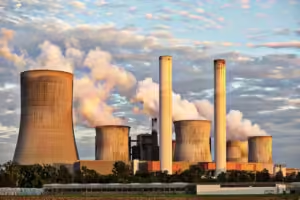
causes of air pollution
Natural as well as manmade sources of air pollution exist:
Natural sources: dust storms, volcanic eruptions, and wildfires.
Anthropogenic sources: Human actions including:
Industrial emissions are those of factories spewing particulate particles and gasses.
Trucks and cars spew significant volumes of CO2, NOx, and other dangerous pollutants.
While cattle generate methane, fertilizers release nitrous oxide.
While fires release a lot of pollutants, deforestation, and wildfires lower naturally occurring CO2 absorption by trees.
Environmental Effects of Air Pollution
In several respects, air pollution seriously compromises the surroundings:
Pollutants including CO2 trap heat in the atmosphere, hence causing the greenhouse effect.
Participation in climate change: Rising global temperatures challenge ecosystems all around.
SO2 and NOx react with water vapor to create acid rain, which damages forests, soils, and water supplies.
Effects of Pollution on Plants
Highly susceptible to air pollution, plants can suffer terrible consequences:
Damage of the chlorophyll in leaves caused by airborne contaminants such as ozone can so limit a plant’s capacity for photosynthesis.
Plants subjected to high pollution levels often show obvious indicators of stress, like leaf discoloration or burns.
Pollutants slow down plant development, lower yields, and interfere with reproduction, therefore affecting their productivity.
Sensitive plant species might not survive in contaminated surroundings, so reducing the biodiversity.
Particular pollutants and their impact on plants
Various contaminants impact plants in different ways:
Ozone: Plant tissues weakened by ozone exposure are more vulnerable to pests and diseases.
By meddling with photosynthesis, sulfur dioxide (SO2) inhibits sunlight and hinders plant development.
Particulate matter limits sunlight and clogs the pores (stomata) through which plants “breathe,” when it settles on plant surfaces.
Effects of Pollution on Wildlife
Like humans, animals endure great suffering from air pollution:
Animals ingest toxins that aggravate their breathing, the same as humans with asthma might experience.
Pollution can destroy habitats, rendering many species unable to live there.
Pollutants settle on plants and in water supplies, therefore contaminating food and drink supplies for animals.
Concerning aquatic life: effects Chemical runoff and acid rain contaminate rivers and lakes, hence reducing fish numbers and aquatic biodiversity.
Effects on habitats for wildlife
Ecosystems can be quite changed by air pollution:
Deforestation can result from pollutants weakening plants and increasing their susceptibility to diseases.
Crucially important for many species, grasslands, and wetlands are destroyed by air pollution, hence reducing biodiversity.
Acid rain corrodes lakes and streams, therefore affecting fish and other aquatic life.
Biodiversity Loss and Air Pollution
Pollution directly causes biodiversity loss as it encourages habitat destruction and degrades ecosystems:
Polluted environments are unfit for many species, which results in declining populations of them.
Endangered species and extinction threats: Particularly in combination with climate change, air pollution can drive already sensitive species closer to extinction.
Human, animal, and plant interdependence
Natural ecosystems are mostly composed of plants and animals; so, air pollution affects all aspects of this fragile equilibrium:
Effect on food chains: Herbivores lose their food supply when plants die, so affects carnivores. It’s a knock-on effect endangering whole ecosystems.
Food, medicine, and ecological services all depend on biodiversity for humans.
Agricultural and cattle economic effects: Pollution lowers crop output and influences animal health, therefore compromising producers’ profits.
Climate Change and Environmental Degradation
Air pollution aggravates climate change rather than only harming plants and animals. Trapped heat by greenhouse gases including methane and CO2 results in:
Global warming: Rising temperatures stress plant and animal species more, many of which cannot adapt fast enough.
More stress on species: Already pollution-stricken species run much more danger of extinction as temperatures rise.
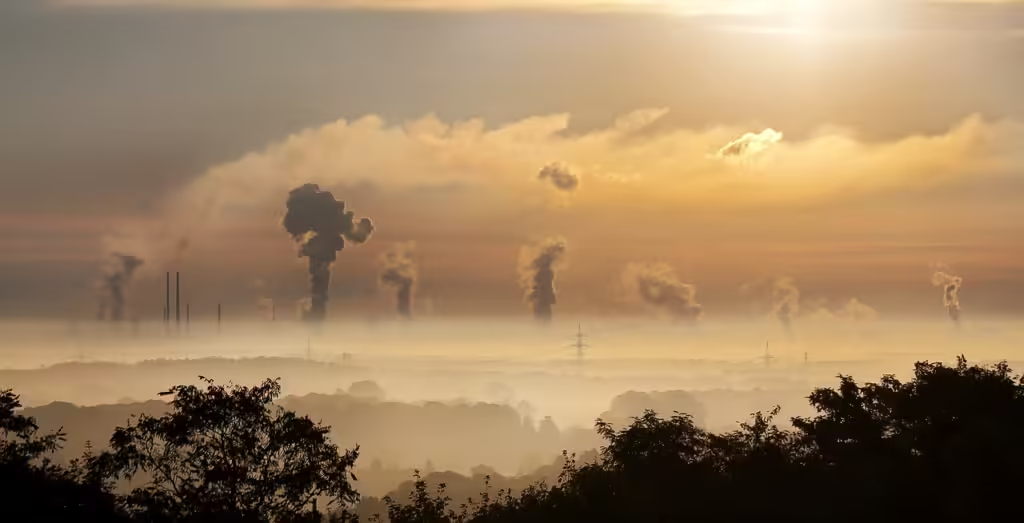
Minimizing Air Pollution’s Impact on Plants and Animals
Reducing air pollution will help plants and animals as much as it will help humans:
Strategies for clean energy: Turning to solar and wind power among other renewable energy sources helps lower air pollution.
Planting trees and designing green areas can help filter pollutants from the air and aid in absorbing CO2.
Using less chemical fertilizers and pesticides will help to lower pollution resulting from agricultural operations.
Global Projects Against Air Pollution
Many bilateral agreements seek to lower air pollution:
Comprising a worldwide agreement to minimize global warming, the Paris Agreement also addresses air pollution control.
Sustainable Development Goals of the UN: These objectives center on lowering air pollution to save ecosystems and advance public health.
Policies of government: More rigorous environmental rules on emissions will help to greatly lower pollution levels.
Individuals: What Can They Do?
Every one of us can help to lower air pollution:
Trees filter pollution and absorb CO2, hence creating green areas.
Walking, riding a bike, or taking public transport helps to lower automobile emissions, therefore improving air quality.
Promoting renewable energy sources is a strong approach to help to lower pollution.
Finish
Global in nature, air pollution affects entire ecosystems, plants, animals, and even human beings. From slowed plant development to animal respiratory problems, its impacts on the natural world can be disastrous. But by acting—personally and in groups—we can minimize the harm and preserve the biodiversity maintaining life on Earth.


FAQ
From what sources does air pollution mostly originate?
Vehicle emissions, industry activities, deforestation, and agricultural methods rank highest among the main culprits.
In what ways may air pollution influence plant development?
It destroys leaves, throws off photosynthesis, and inhibits general development, lowering productivity.
How might the pollution of ozone affect plants?
Ozone impairs defenses, destroys plant tissues, and can greatly lower crop production.
How does pollution of the air affect animals?
Air pollution causes respiratory problems, habitat loss, and contamination of animals’ food supplies.
Is species extinction possible resulting from air pollution?
Indeed, species extinction can result from the interaction of habitat loss, health issues, and climate change aggravated by air pollution.